

There are two main categories of Japanese maples. The first is the upright, or tree form. This kind matures to 10 to 30 feet tall, depending on variety. The second category is the laceleaf, or dissectum form. These feature weeping branches and grow wider than tall, maturing to 6-10 feet. There are also a few varieties that have characteristics of both.

A distinct advantage of Japanese maples is that they provide year-round interest in the garden. In the spring, the new foliage is usually bright red, leafing out when there is not much other color to enjoy. During the summer, the mature foliage of red, bronze, green or a combination of these, along with the unique forms of the branches, create distinctive focal points. The fall color is always a bright red to bronze, giving a fiery look. In the winter, the foliage gives way to sculptural branching that can even be bright red or variegated.
Where Should I Plant a Japanese Maple?
When deciding where to plant a Japanese maples, take into account the desired location and the type of plant you wish to have. Upright varieties, such as Bloodgood or Coral Bark, need less square footage than the laceleaf varieties such as Crimson Queen or Red Select. The upright makes an excellent entrance tree or garden specimen. It can be planted fairly close to the house, since it does not have invasive roots.
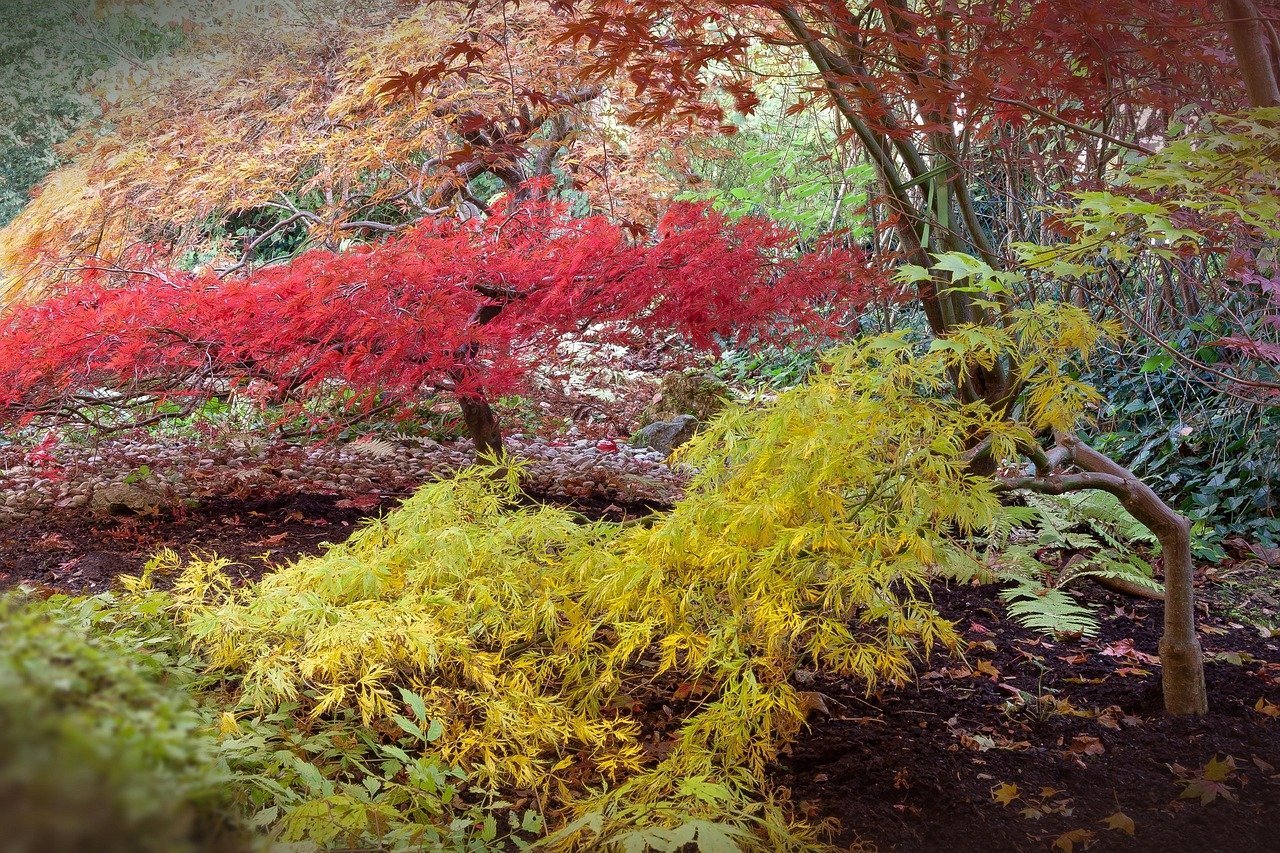
The dissectum or laceleaf form makes a great garden focal point. Be sure to allow enough room for its eventual mature size. Laceleaf maples look great planted at the edge of a pond, resulting in a beautiful reflection in the water.
Do Japanese Maples Prefer Sun or Shade?
Japanese maples do well in either sun or shade. Ideally they prefer morning sun and filtered afternoon shade. If planted in full sun, the red-leafed varieties will generally fade or turn greenish in color. If planted in shade, the red varieties will retain their color better, but will probably grow more slowly.
How Can I Prevent Leaf Scorch on Japanese Maples?
One common problem seen in Japanese maples is leaf scorch. During the summer the leaves can develop a kind of “ratty” look. Water droplets due to overhead watering or recent rain create sort of tiny magnifying glasses on the leaves. When the sun hits these droplets-turned-magnifying glasses, it can cause scorch in the leaves. To help prevent this, water the base of the tree, not the foliage. You can also apply a product like Wilt-Pruf to the foliage (we recommend using a sprayer and mixing 15:1 in a gallon of water). Good horticultural practices, such as deep, even watering (at the base), providing good food, such as Agriform tablets or Nursery Special, and keeping the plant well mulched will help prevent most cosmetic damage.
Betty’s carries over thirty varieties of Japanese maples in sizes ranging from a one gallon plant to mature, specimen plants. Roam through our beautiful beds to compare the differences in the varieties. While you’re here, ask for a free copy of our Japanese Maple Care Sheet for much more information on the many varieties that we carry.


